| Back to Back Issues Page |
 |
|
Garden Bliss & Blunder, Issue #61 September 08, 2026 |
SEPTEMBER BLUES...
Yes, it's easy to feel a bit blue, realizing Summer is over, but there are blues that give us joy too.
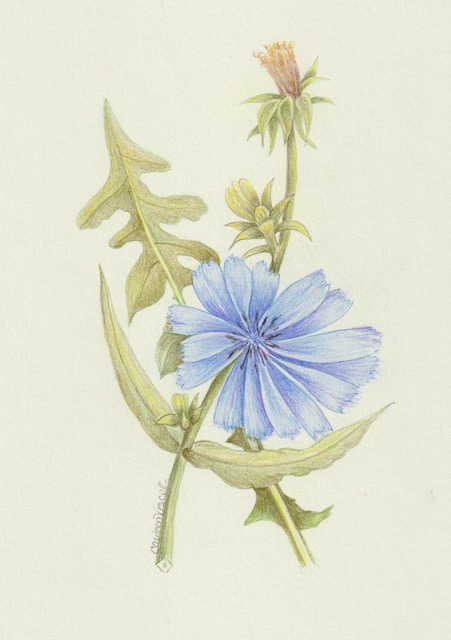
My sketch of Chicory flower
Photo credit: Tami Gingrich
Common chicory (Cichorium intybus) is a somewhat woody, perennial herbaceous plant of the family Asteraceae A ribbon of blue… it’s a grace spot … grace polka-dots along the roadside - doing what they do best… spreading joy. Summer's end...
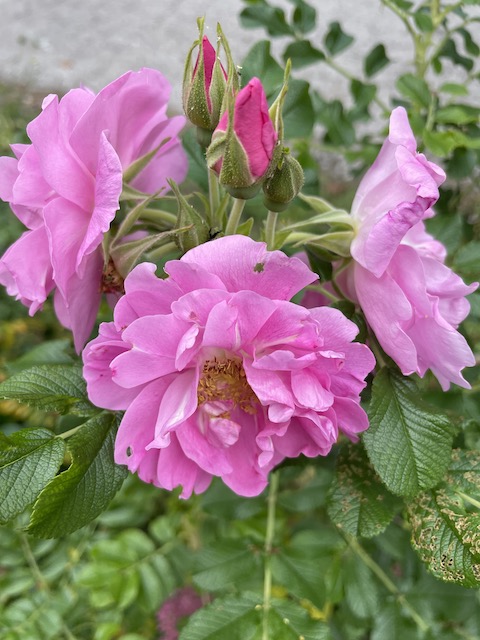
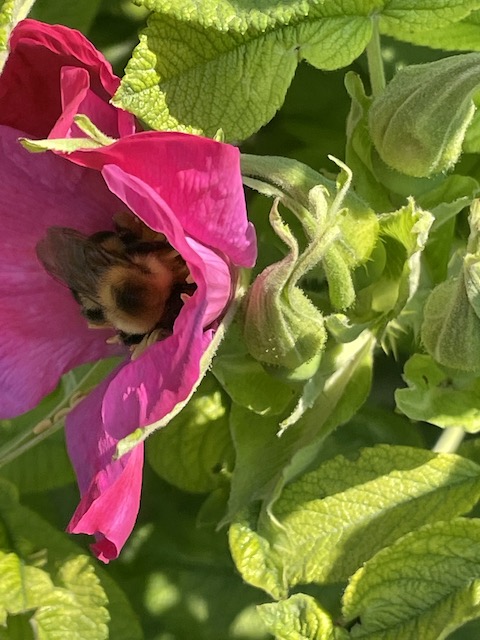
"Jens Munk" Canadian Rose: Photo: Cauleen Viscoff “When the hornet hangs in the hollyhock, And the brown bee drones in the rose; And the west is a red-streaked four o’clock And summer is near its closes, It’s oh, for the fence and the leafy lane, And dusk and dew and home again.”
Madison Julius Casein (1865-1914)
Photo: Cauleen Viscoff GOLDENROD ALLERGIES?
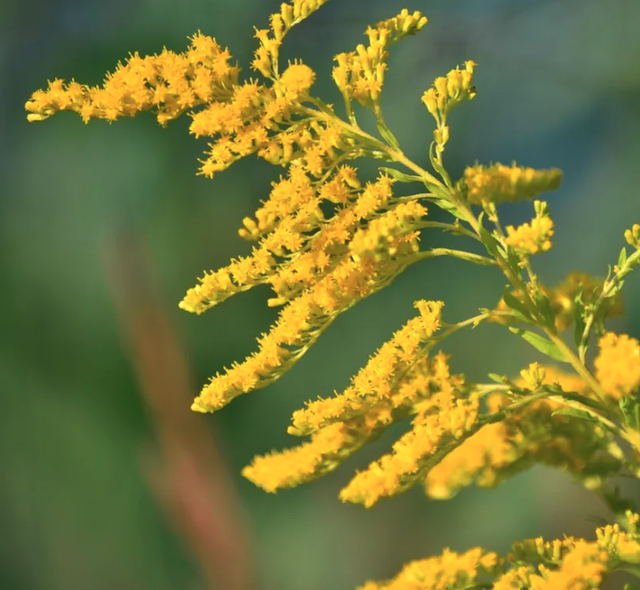
Photo credit: Julia Bilousova Allergies? Don’t blame Goldenrod! (Solidago) Those big yellow flower heads may look like allergen factories, but their pollen is heavy and sticky and can’t fly through the air. Instead, you’re probably sneezing because of RAGWEED (Ambrosia artemisiifolia)- a much less striking plant with green flowers. Ragweed releases its irritating pollen freely into the wind.
(massaudubon.org)
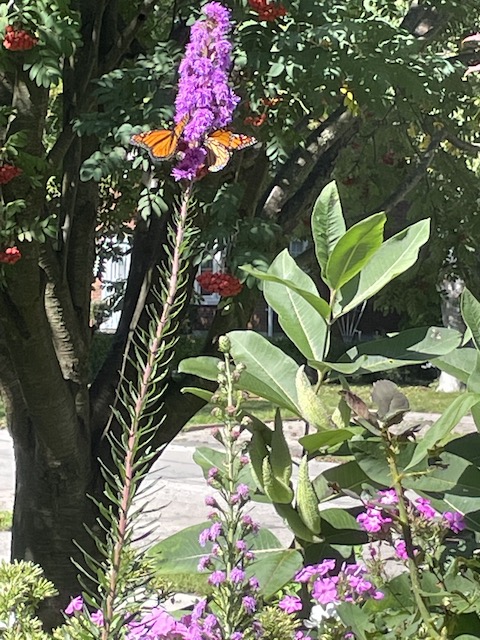
MONARCHS
Photo: Jen Bird
U. Ottawa, examined six plant species for Monarchs and two stood out for providing the most amount of fat for the monarch - Solidago (Goldenrod) and Echinacea (Coneflower). Interestingly, Butterfly Bush was one of the worst. They also found the plant that monarchs most visit in their region, according to naturalist sightings, is Symphyotrichum ericoides, or White Heath Aster and yet this plant did not provide the best nutrition, showing how we should not rely solely on "which plants we see monarchs on" to determine which are important. Our Liatris aspera or Rough Blazing Star is also called Ball Liatris - it likes full sun, clay soil, no fertilizer (makes the stems flop) and is drought tolerant … and for a few weeks in late August and early September is full of Monarchs..
TIME TO PLANT? Maybe...If the days are still hot, hold off planting until the weather cools a bit... The soil will stay warm until the end of October and maybe even into November here in zone 5 so while plants are on sale, they have developed strong roots and till establish quickly in the fall. Yes, spring is also a good time but the soil can take until May here to warm up enough for plant roots to take hold. Divide plants when it cools a bit too.... dividing and planting is always stressful for any plant and heat just adds to that... so be aware of hot days and wait a bit... Buy plants - but be prepared to water them well until you can put them into the ground. So find what you love, and plant it this fall. Save room for bulbs in the next few months.
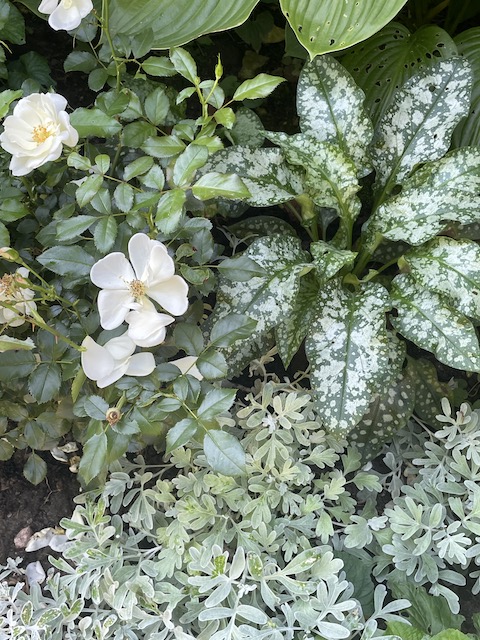
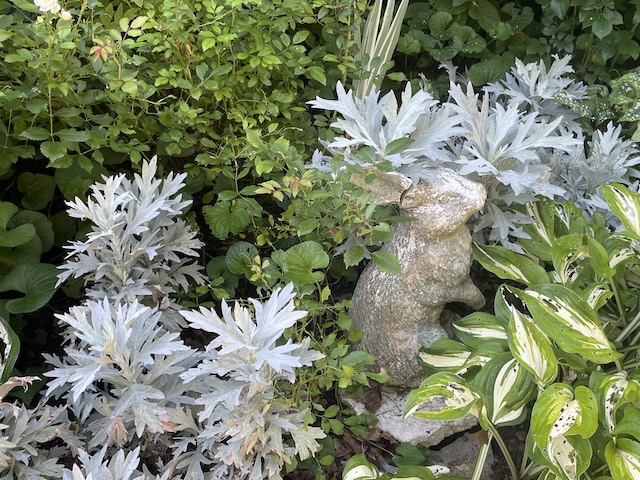
YES, GREY is a COLOUR !
Photo: Cauleen Viscoff Sometimes a lot of colour is, well, a lot. And as our eyes move around our garden, they often rest longer in an area of greens and greys. Grey from Artemisia, a tired cement bunny who found a new home, white roses and white spotted Pulmonaria..
Find a cool shady corner and find some greys and whites.
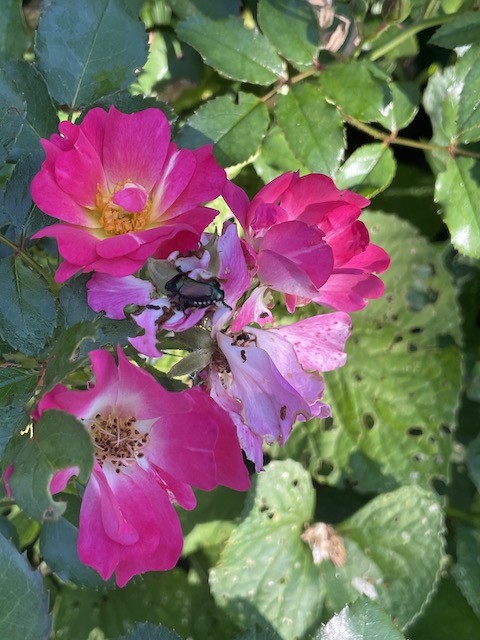
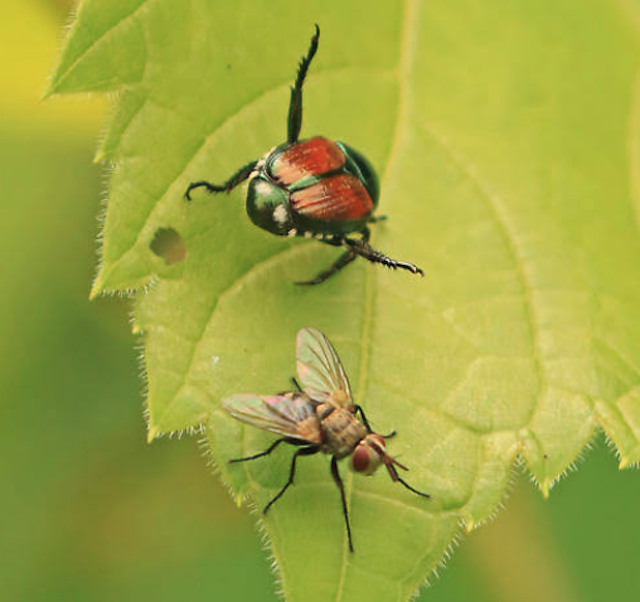
Photo: Cauleen Viscoff Japanese Beetles & Winsome Flies
Photo: Cauleen Viscoff WINSOME FLY - (Istocheta aldrichi) - a fly species introduced from Japan to combat Japanese Beetle (Papilla japonica) - established in northeastern US and Canada Adult flies are about the same size as a housefly and emerge a few days ahead of the beetles feeding on plant nectar.
By mid- to late-June, the first adult flies emerge from pupas, feed on floral nectar, mate and seek Japanese Beetle adults; there is only one generation per year.
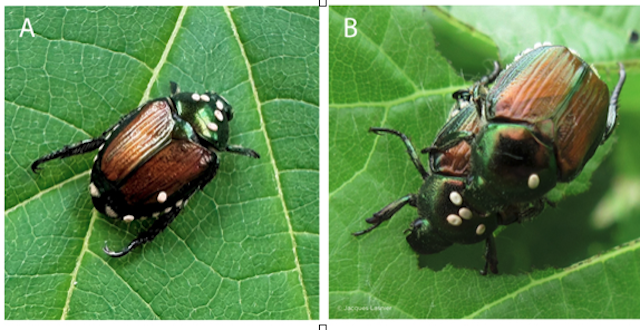
Photo credit: Grepoli Female flies lay one or more round white eggs just behind the beetle’s head. Within a few days the parasitic larva hatches and its "serrated" mouth bore through the host feed. As the larvae develop, the beetle becomes lethargic, stops feeding in a few days then dies in about 5-10 days. WF larvae typically pupate within the JB cadaver, and remains in the cadaver to overwinter.
Photo: (photo credit: U. of Minnesota -Hutchinson, Buchholz, Meys, Wold-Burkness NORWAY MAPLE ISSUES...
Photo: Cauleen Viscoff
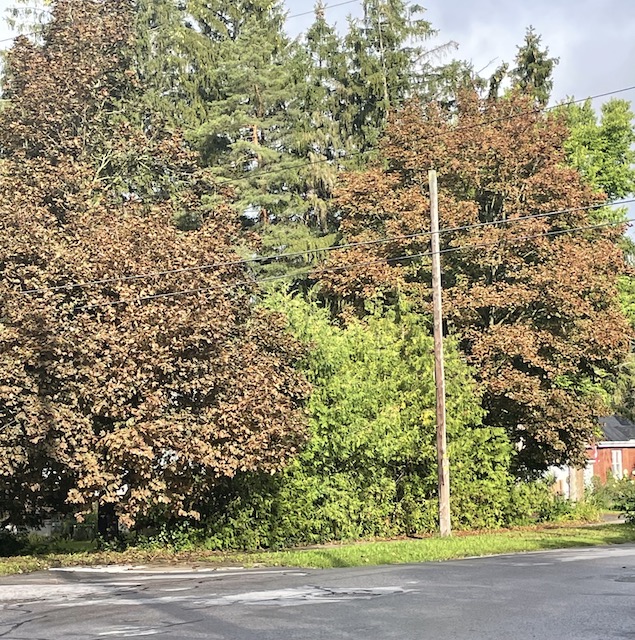
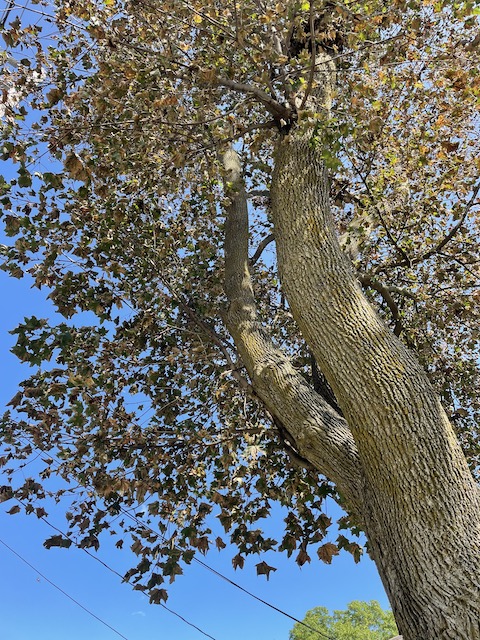
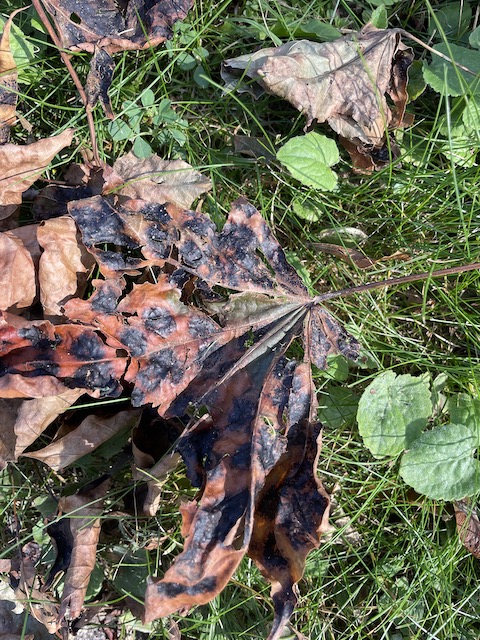
Photo: Cauleen Viscoff In our neighbourhood, most of our city and throughout Southern Ontario, the Norway Maple trees are showing signs of browning, dying and falling leaves. According to city arborists, they are seeing signs of decline and early leaf drop most likely associated with some lingering effects of the drought last summer (which shows up this year) and longer periods of extreme heat this year. Many Norway Maples are also subject to signs of "tar spot", a fungal disease causing dark spots on the leaves. An early wet spring likely increased the appearance of these black spots. Although this looks awful, it does not often cause any serious long term damage to healthy trees. If your leaves look like these below, rake them up and leave for city yard waste pickup to prevent the spores from spreading to next year's growth. Most trees will recover with healthier foliage next season.
BUGS and BEASTIES...BOX TREE MOTH Many of you have already lost your lovely, easy going Boxwood to a mean-spirited moth. I admit to liking the way Boxwood can be shaped so easily.... and in a blousy garden, a round sphere-like shape can act as a punctuation mark... But lately, this cranky moth has decimated many Boxwood and more are succumbing weekly.
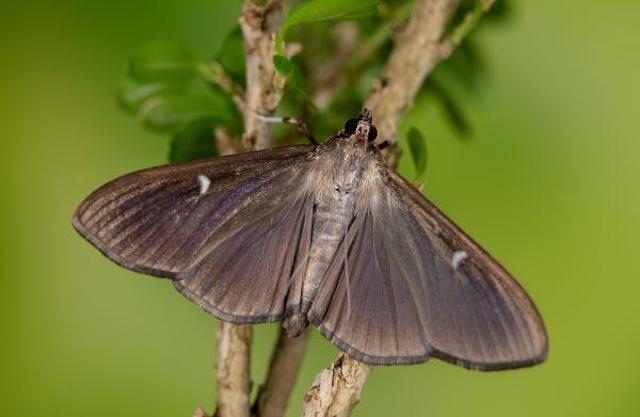
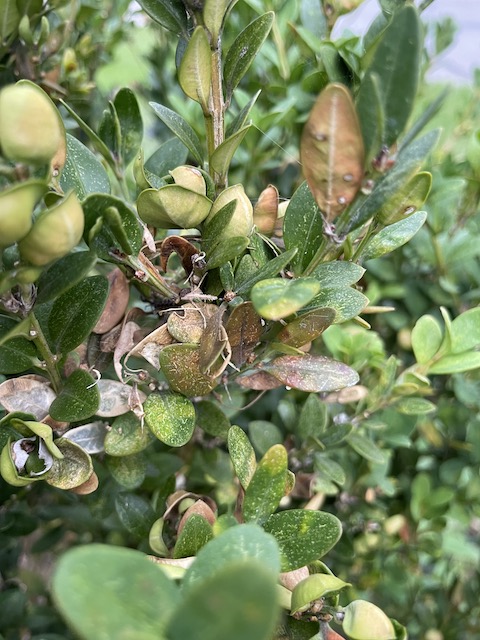
Photo credit: Home and Garden Info Centre The Box tree moth (Cydalima perspectalis Walker) is a serious pest affecting Boxwood plants (Buxus spp). It does not pose a risk to human health. Box tree moth can fly an estimated 5-10 km per year. It also spreads through the movement of infested boxwood shrubs. Look for dried leaves, bits of webbing, and early on, small caterpillars.
Photo: Cauleen Viscoff Although not always easy to see, look for bark damage as the moth can penetrate the bark and cause potential girdling. It may be necessary to remove damaged plant foliage and bark and usually best to remove the whole bush and replace with an alternative such as Ilex, Sweet Spire or Yew etc. Some folks maintain the bush can be saved by removing affected branches, but if the damage is this visible, the serious damage will already be done.
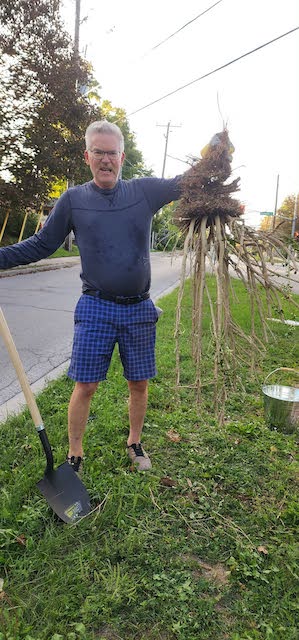
Photo: Jen Bird One of our intrepid and enthusiastic volunteers at the Barnardo Garden, this is Ralf showing off one of the Box tree moth victims. Ralf is a friend and neighbour who rides his bike to the garden, with his "silver" bucket for weeding and used his brute strength to help Jen dig out this dying Boxwood.... He also shares the best coffee from their family coffee farm in Columbia... Have you tasted Carolina's Columbia Coffee? if not, why not? .... enjoy this amazing coffee at the Peterborough Farmer's Market or check it out on line here...for local delivery or shipping.... SPIDER RESCUE...
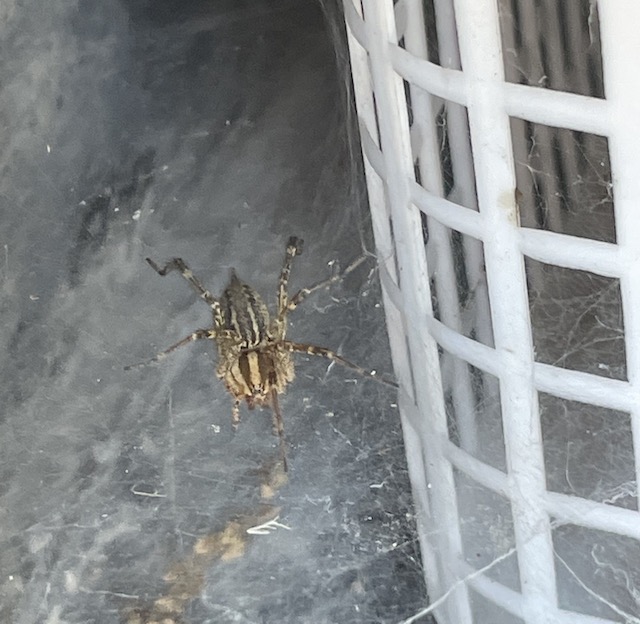
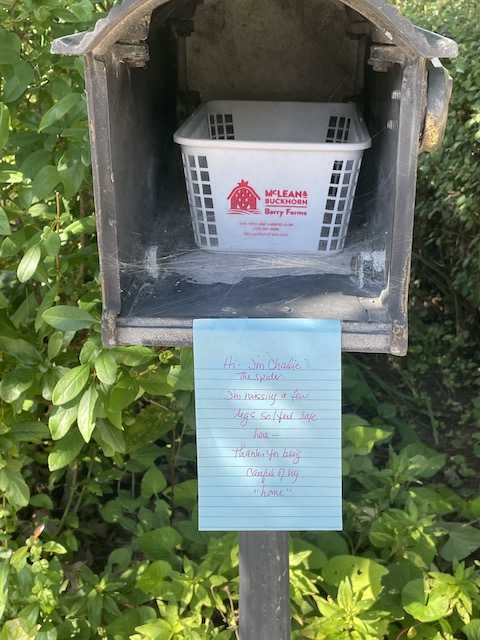
Photo: Cauleen Viscoff "Charlie", a Grass Spider lives in our mailbox and appears to have "lost' 2 of his legs. However, it seems Spiders can lose a leg or two (on purpose) if they need to escape predators, injuries, or during the moulting process.. They detach the limb at a specific weak point near the base of the body (the coxa-trochanter joint) As they shed their exoskeletons, the youngsters can get stuck or injured and either lose a leg or remove it themselves. They also have specific muscles inside the leg base that contract immediately when a limb is detached that seal the wound, while special proteins and enzymes form a clot to prevent (spider) blood loss or they could bleed to death. Immature spiders with more moulting ahead of them may regenerate a lost leg. A small bud forms under the exoskeleton and grows into a new, functional leg. As for an older spider that stops moulting, it can’t regrow a missing leg and must live with the loss. Thanks to friend Steven who did some research for us. So, it is wait and see. In the meantime, his protection web is pretty magnificent and even the mailman is intrigued and gently puts the mail in another pot so not to damage his handiwork....
PRAYING?
“It doesn’t have to be the blue iris, it could be weeds in a vacant lot, or a few small stones; just pay attention, then patch a few words together and don’t try to make them elaborate, this isn’t a contest but the doorway into thanks, and a silence in which another voice may speak”
Mary Oliver
Photo: Cauleen Viscoff THISTLES?
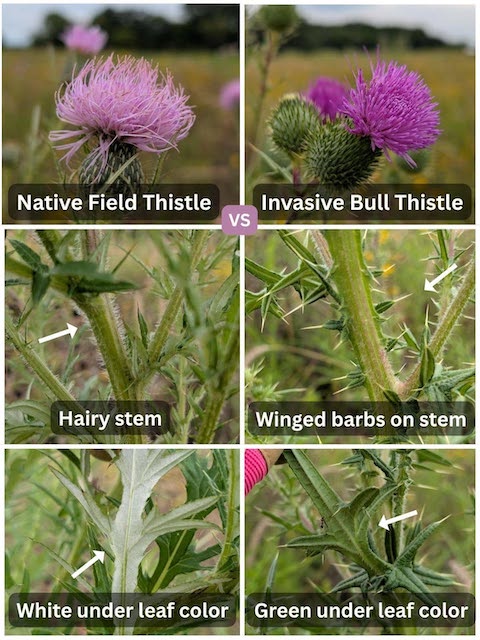
Many native gardens have lovely thistles in them. .. but here's the thing, make sure you choose the right plant. .. some are not native and it is easy to tell ...if you look carefully.
SAVE SOME SEEDS...
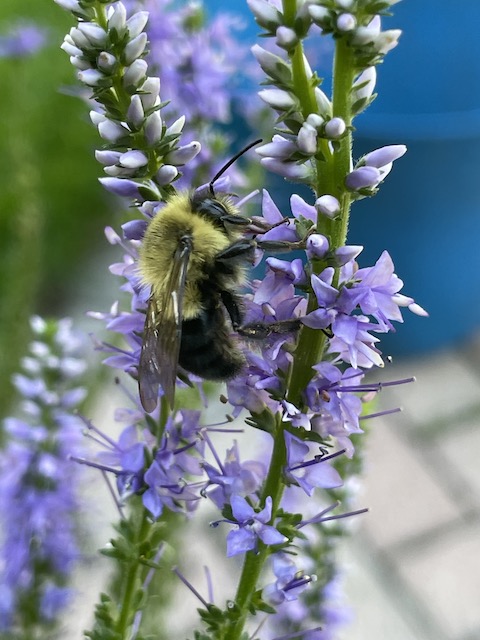
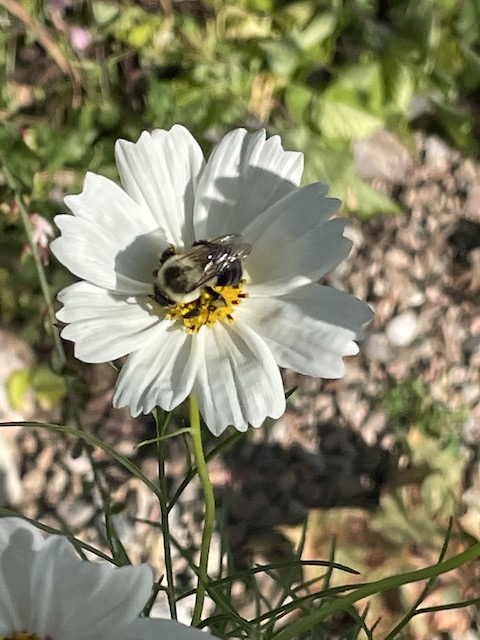
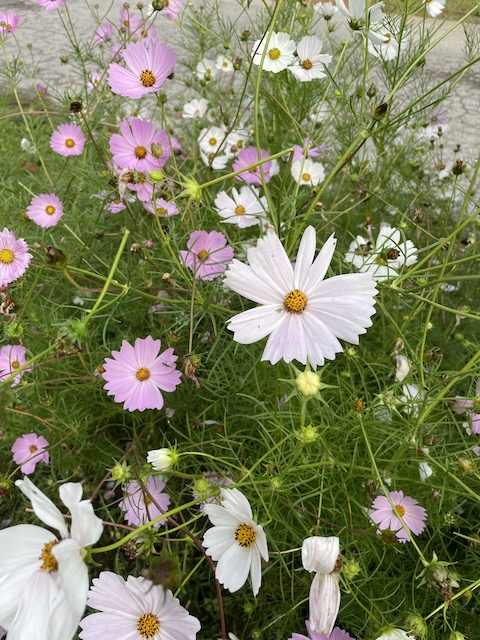
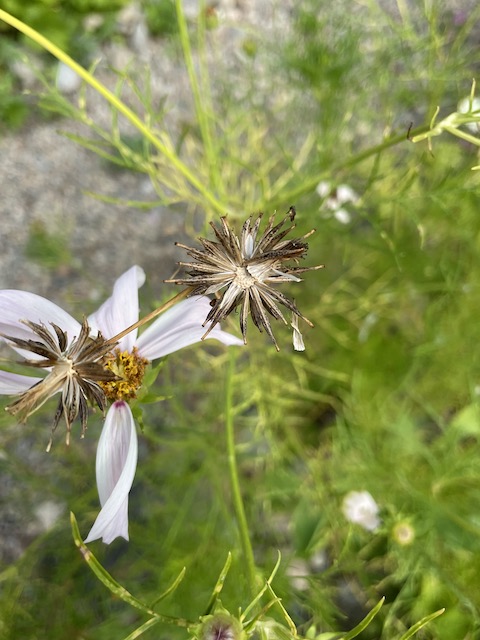
Lately we have seen 2 Goldfinches eating the seeds of the Cosmos.... while avoiding those blooms with sleeping bees. So tap some seeds into a brown paper bag... then later this fall, scoop up a handful of compost, add some seeds and place them in bare spots in your garden... You will not be disappointed... 3 handfuls in our boulevard and they are coming up everywhere... making a most glorious display.
Photos: Cauleen Viscoff
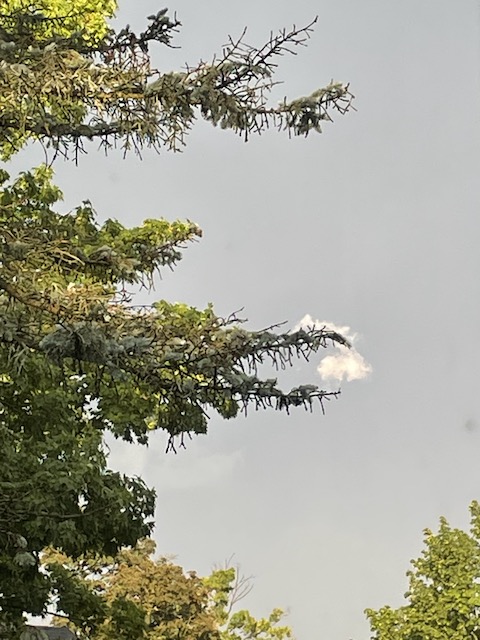
TREES SLEEP...
I love the idea that trees sleep... but then play with clouds while awake
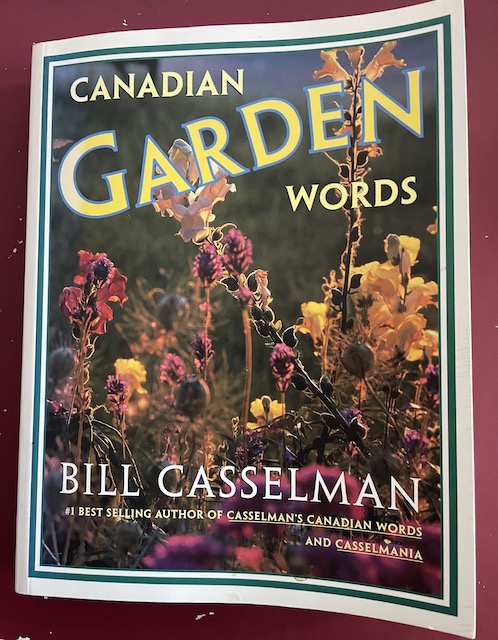
Photo: Cauleen Viscoff BOOK...CANADIAN GARDEN WORDS: by Bill Casselman I LOVE THIS BOOK.... STILL LAUGHING ! Although published in 1997, this book is hilarious and full of fascinating facts about how Canadian plants got their names... For example: Mistletoe? means shit-on-a-stick. ...because folks thought the berries came from birds sitting on a branch while doing their "business". ... long funny history but makes one see plants in a whole new light.. Look for it.... second hand shops? your local library?
UNTIL NEXT TIME...
LUCY SAYS...Wear the shirt that says who you really are... and give lots of love
Back Issues for Garden Bliss & Blunder
|
| Back to Back Issues Page |