| Back to Back Issues Page |
 |
|
Garden Bliss & Blunder, Issue #57 May 07, 2026 |
SPRING - or NOT?
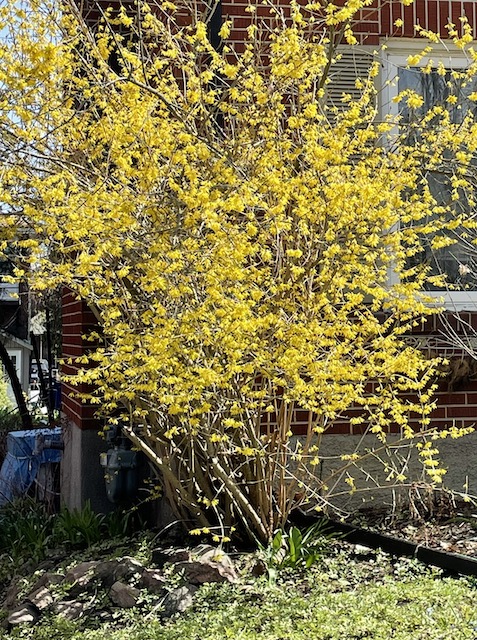
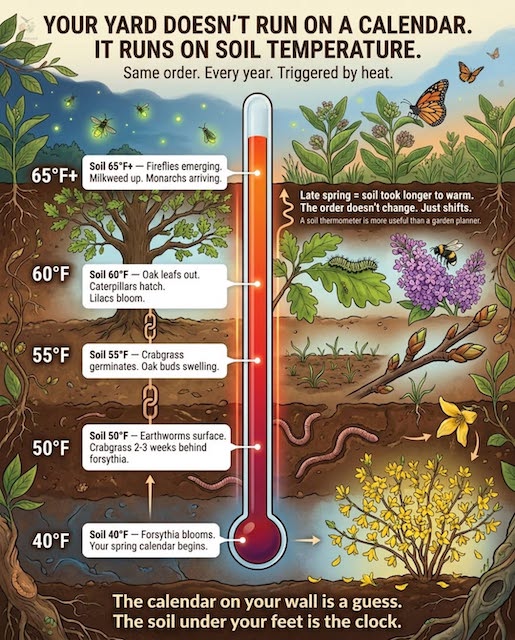
Dandelions don’t bloom because it is April, or May… they bloom when the soil 3 inches beneath them gets to a specific temperature for enough consecutive days to make them bloom. Our gardens do not run on a calendar; instead on accumulated heat sources and those triggers fire up in the same order, year after year. Forsythia blooms, the crabgrass germinates, then Lilacs bloom, the Oak leafs out and this order does not change. If the Forsythia blooms late, then everything downstream shifts late too … same if it blooms early; everything shifts too. Forsythia blooming means the crabgrass is 2 or 3 weeks behind. The first exciting Firefly flash follows a certain soil temperature threshold … the first Monarch arrivals follows the Milkweed sprouting. Every event is locked into the one that comes before it. Planting dates and pest emergence all follow soil temp… not the calendar. A late spring does not mean things are broken; it means the soil took longer to warm up…. the whole sequence still runs in order - it just shifts. Our calendar is a guess: the soil under our feet is the clock. (ref. Guardians of Nature)
Friend Linda's Forsythia
Guardians of Nature DANDELIONS...
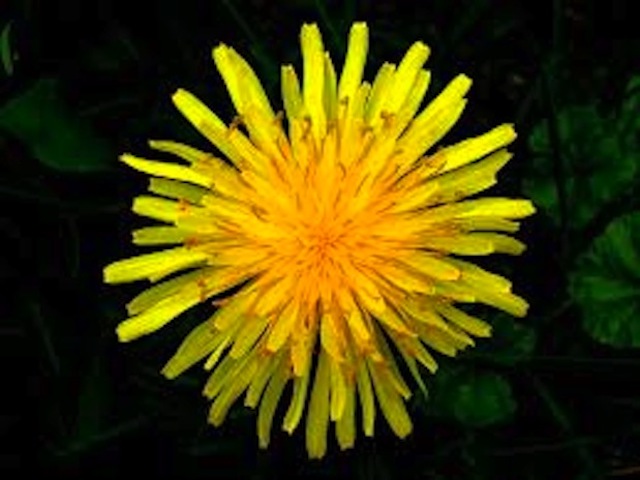
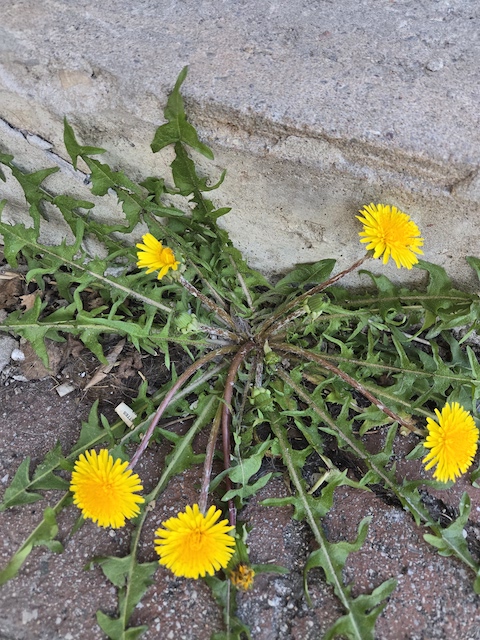
From the French word “dent de lion” meaning “Lion’s Tooth”, referring to the toothed leaves. One of the earliest and longest flowering season of any plant whose seeds are picked up by gusts of wind and spread for miles… as many as 5. Their nectar and seeds attract birds, bees and butterflies as their sunny faces open in the morning sun and close in the evening to store energy. For decades, Dandelion roots, leaves and flowers have been used for food, medication and dye along with making wine or root beer ….. some even use the root as a substitute for coffee…. yuk… in spite of Dandelions being one of the most successfully surviving plants in the world, our culture continues to spend millions of dollars on lawn pesticides for uniform lawns and in doing so, use about 30% of the country’s water supply to keep grass green. It is time for us to gracefully pivot to an ecological landscape and gardening that is sustainable and still functional. Besides, their leaves are green - like grass.
Friend Stew's Dandelion WILD VIOLETS...
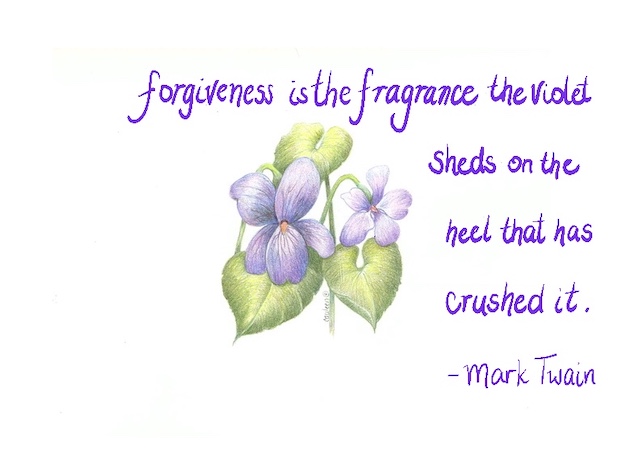
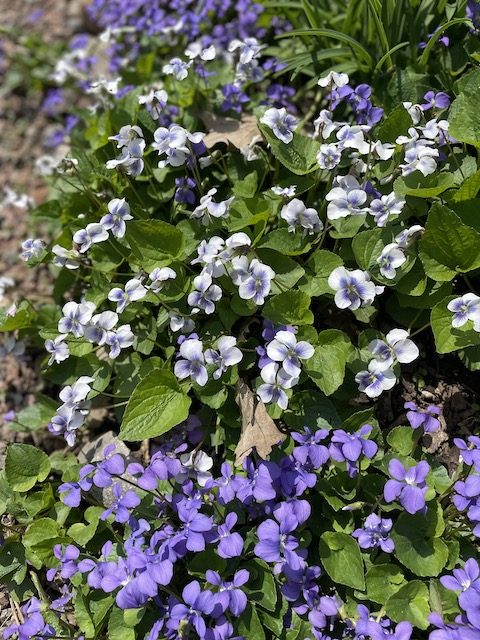
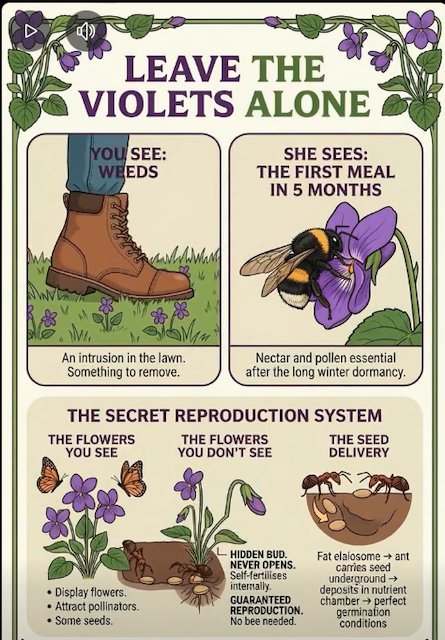
Jen added this quote to my sketch Native to Ontario and most of Canada, they are a beautiful host for Fritillary Butterflies. The females lay their eggs on them and the larvae (caterpillars) depend on the flowers as a food source. Although usually purple, some of ours are white with purple centres . I love seeing them come up with their sweet flowers early in April and blooming early May. Many folks see them as weeds and like any plant, can take over empty spaces. In my garden, they are green mulch. They feed the bees in the Spring, make sweet bouquets and their leaves stay green all summer. If they roam in places you don’t want them, dig them up - they have short spreading roots - and move them. They grow in poor or rich soil…. under hedges or shrubs where many plants aren’t happy.
DAFFODILS...
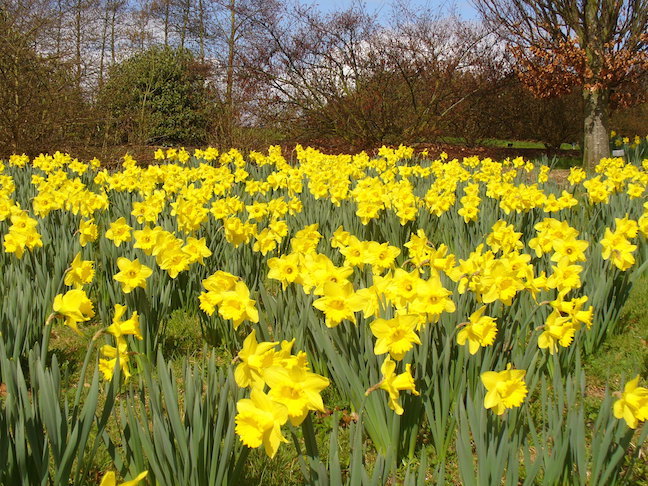
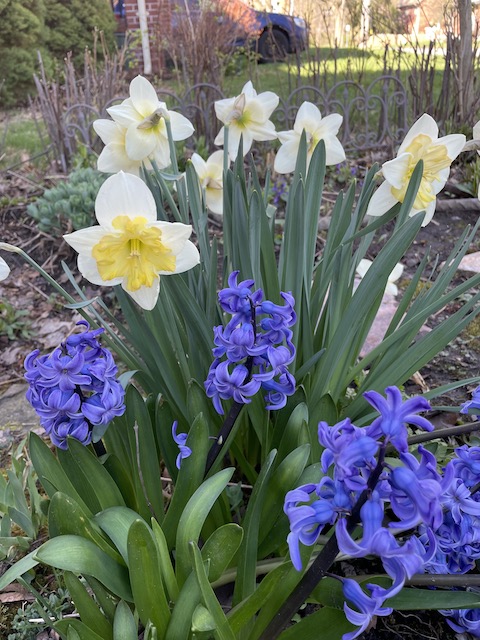
It derives its name from 14th century Middle English “affodil,” (a type of lily.): the Dutch added the “d.” Narcissus derives from the Greek “narco” or narcotics because all parts of a Daffodil are somewhat poisonous. It is difficult for bees to get much if any nectar from Daffodils as most of them are hybridized and have lost a lot of nutritional value. However, they do provide a lovely safe and warm place for bees to rests on cold, gusty spring days.
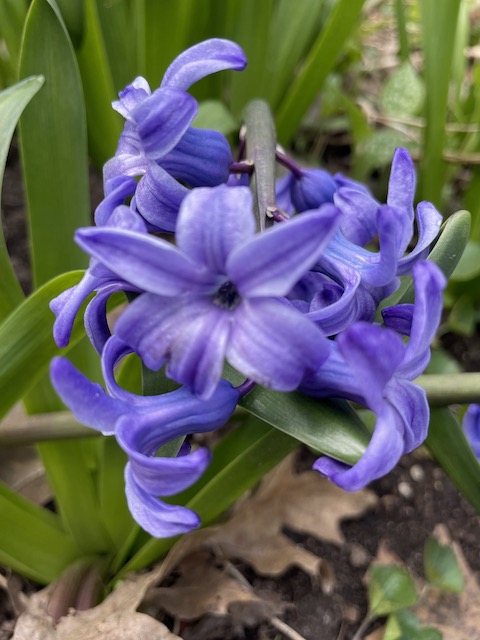
Hyacinths on the other hand have open florets; easier for bee access
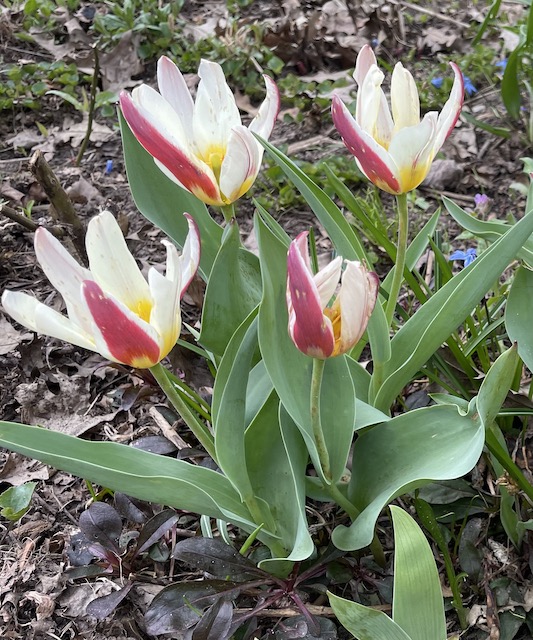
Bees also love these open Tulips
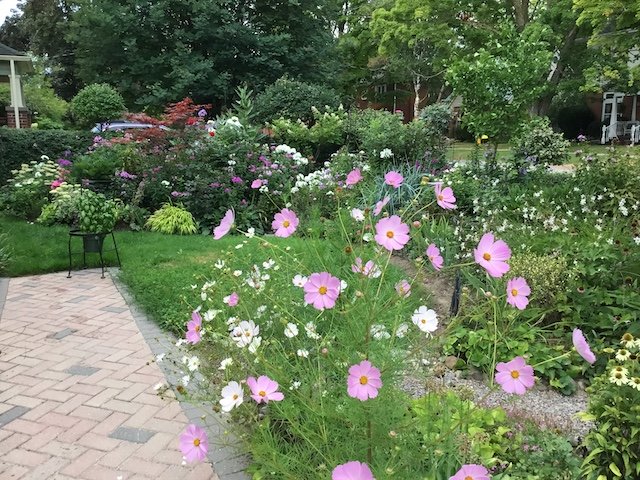
PLANTING SEEDS ?Check the package for instructions: when and how to plant Interplant your existing garden with seeds and some pollinating annuals… like Cosmos which will bloom until frost ...or poppies. Both will seed themselves.
If you are planting seeds in an established garden (like grasses for interest or height), create a pattern such as a curvy line, or a spiral … remove existing plants in that space and plant your seeds… it will be easier to see the new seedlings this way. If you are like me, some of my perennials have decided to take over my garden … truth be told, I rather like it… but now that I want more native flowers, I need to split those taking over to make room If you are creating new beds, use the splits to fill in or share with a garden friend.
AMAZING ANTS...
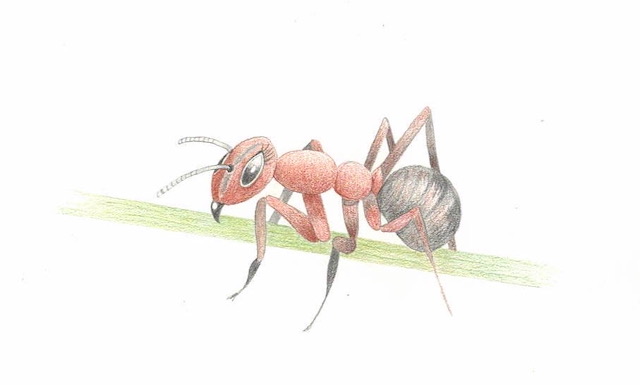
Thanks to Claire Sullivan for this article on Ants Myrmecochory (pronounced murr-muh-koh-KOR-ee) describes a symbiotic relationship between plants and ants, allowing for seed distribution and also providing ants with a tasty snack. Myrmecochory is particularly important for spring ephemerals like bloodroot (Sanguinaria canadensis), Trillium (Trillium spp.), Dutchman's breeches (Dicentra cucullaria), Trout Lily (Erythronium americanum), and Spring Beauty (Claytonia virginica). These plants have incredible seeds that have a fat-filled structure on their exterior called ‘Elaiosome’ (from the Greek ‘elaion’ and ‘soma’, meaning oil and body). Elaiosome is a highly nutritious food source for ants, filled with rich lipids, amino acids and other nutrients. Ants are attracted to these fat covered seeds and carry them back to their homes where they eat the elaiosome and then discard the seed near their nest in “trash” zones alongside decaying plant and animal matter. These ant trash piles are ideal for the seed’s germination as it is underground, in nutrient rich soil and away from predators such as birds and mice. There are over 11,000 plants worldwide that rely on myrmecochory to disperse their seeds. Seeds carried away avoid competition with the parent plant and help spread the species to other locations. It’s a fascinating example of symbiosis in which the plant can distribute their seeds over a wider distance while ants can enjoy a nutritious snack! (reference: xerces.org)
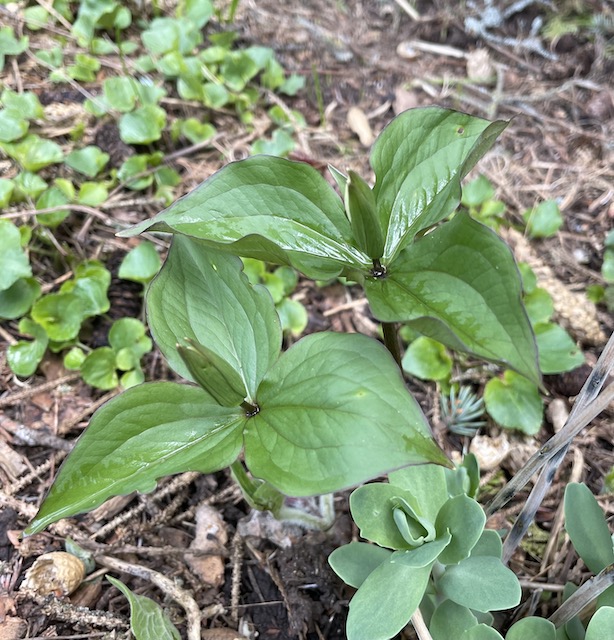
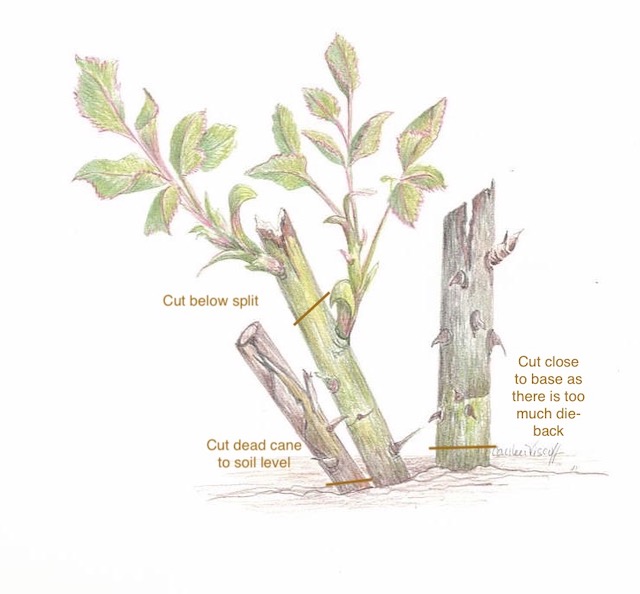
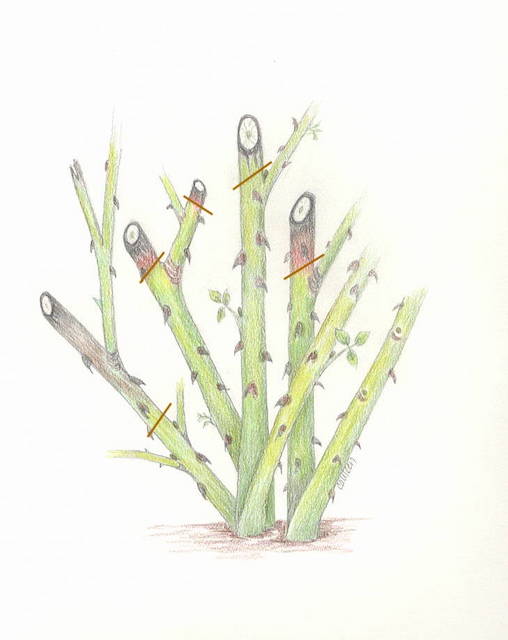
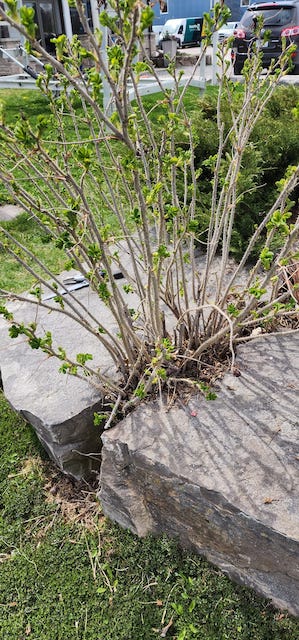
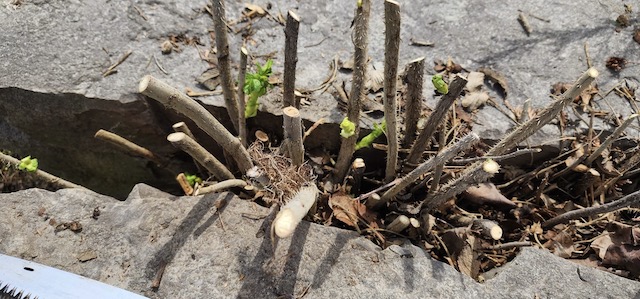
Thanks to ants, we have 2 new Trilliums about 2 feet from the one we planted. TIME to PRUNE ROSES?In our garden, Spring seems a bit later than other years... so even though I am eager to prune my roses... it is still early. Some of the canes are still brown and even though they show life close to the ground, pruning canes too early can stimulate new tender growth that an unexpected spring freeze can damage. Be patient and take the time to just LOOK at your roses and see how they grow. This is really important for pruning... Learn how they grow so you will learn how they want to be pruned... it does make a difference. .. and then consider these sketches below to give you some things you could do now. Some of these cuts are more obvious and you can deal with these now while you wait for the rose to begin its summer journey.
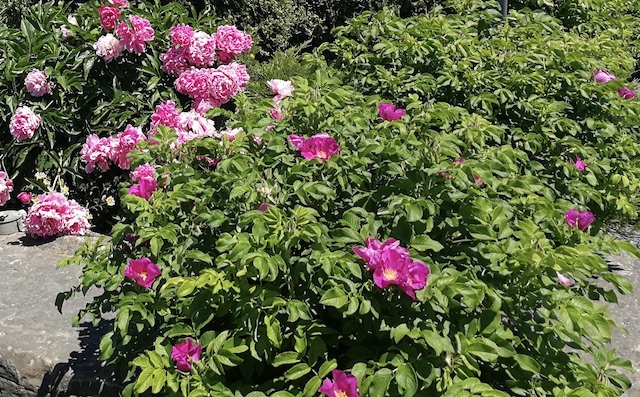
These cuts are obvious because the deadened ends are dark. If you have Rosa Rugosa (some call them wild roses), you can be more ruthless with these as they grow vigorously and can fill large spaces with flat pink blooms that smell glorious and bees LOVE...
Last Summer These roses grow and bloom prolifically all summer and the following Spring need to be pruned back hard (meaning a lot) ... over the years, the older roots die off as new ones form and those break off easily and pulled out to make room for new ones.
All those canes above are last year's growth and if not pruned, this year's will grow out from those ends making the rose huge ... keeping it under control will make more blooms and keep the die-back less.
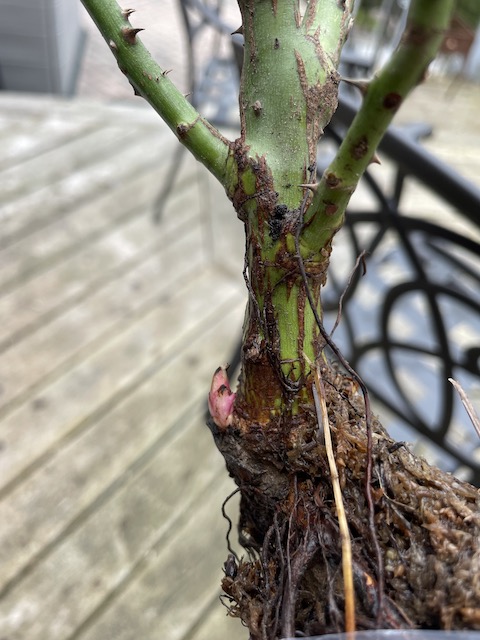
Now go to this page in the link below for more. ... and if you have any questions not answered there, please use the contact page and send me a note and photos... pruning-roses-is-easy.html PLANTING A ROSE?When the soil is not cold (may not feel warm to the touch, but if it does not feel cold, and you are ready to plant your rose.... check the link below ... and in the meantime, if you have recently got one and it came bare root, as well as grafted - look at it carefully. Here is our new rose; recently delivered and we are getting ready to plant. This is what we saw....
That little sprout is actually coming from the rootstock which the upper rose is grafted to...tender roses are often grafted to a hardy rootstock so they can grow in colder climates. That little bud will not grow to produce a bloom like the rose we bought, instead it will be like the rose of the rootstock ... So, pull it off.... don't cut it because that just encourages another to grow. Plant this grafted rose so the graft is at least 3 to 4 inches below the soil surface. This protects the graft from human or critter damage and also cold winters.
oops...SPOTTED LANTERNFLY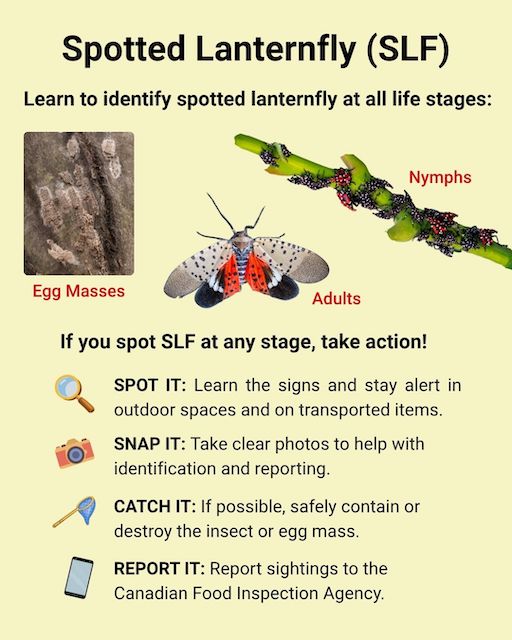
UNTIL NEXT TIME...
LUCY SAYS...Be sure to take lots of walks but if the rain and wind are chilly, come inside, have a snack and cuddle up in a cozy nest with a warm blanket and stuffy friends
Then when it is dark, lie on the sofa and watch Monty Don between naps.
Back Issues for Garden Bliss & Blunder
|
| Back to Back Issues Page |